February 5, 2026
It was close to the beginning of my watch collecting/making journey that I discovered Soviet era time gages. I have taken apart and modified several Soviet watches and movements for myself and for customers, including calibers made by Molnija, Vostok, Poljot and Slava. I find many vintage Russian watches to be well made, at least in the robustness category. Most are not precision machines – I don’t think they were made for that – but they seem to be able to lake a lickin’ and keep on tickin’ much more so than any Timex… and they are much more accurate than Timexes as well…
This latest Slava mod started out as a movement/dial/hands unit that came in a lot I bought on EBay from Ukraine about a year ago. The movement had a broken balance staff pivot, but the dial was cool, and is what started me on this mod. In particular, the bolt-on hour marker ring… never seen anything like it before, and therefore a perfect case for preservation inside a very special GPF Franken.
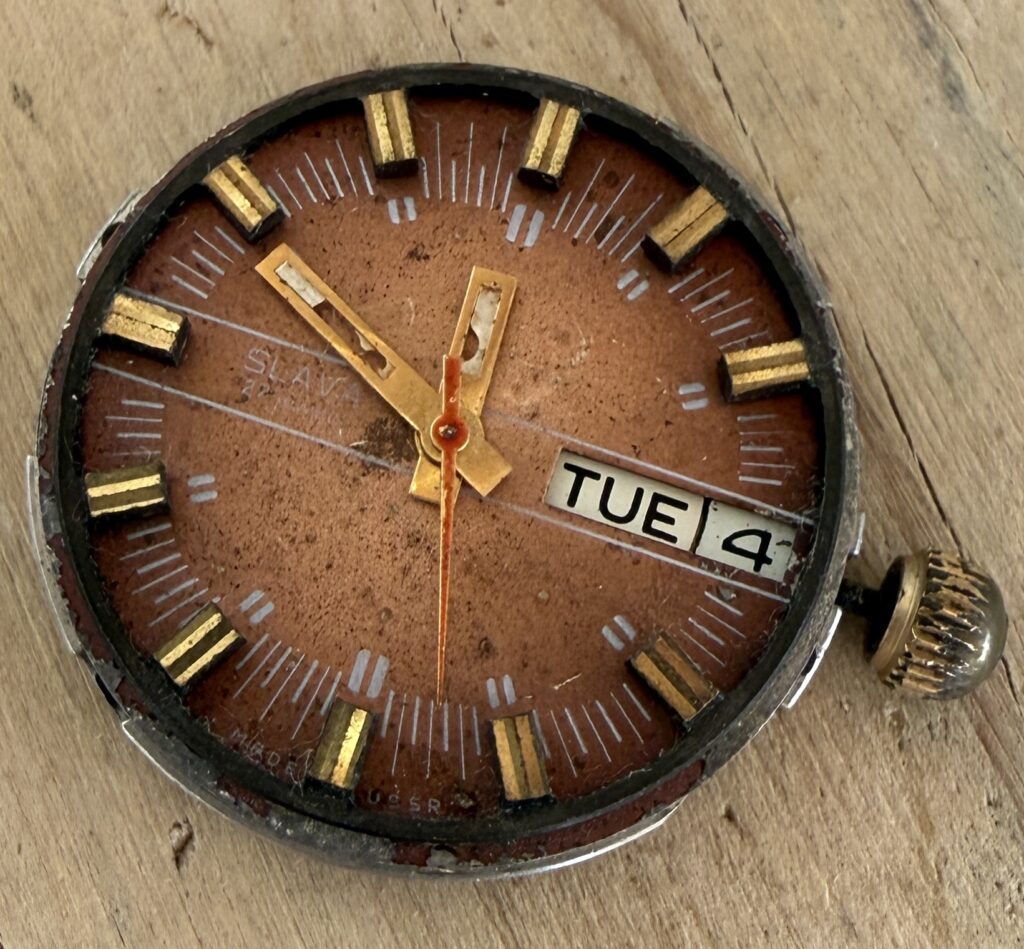
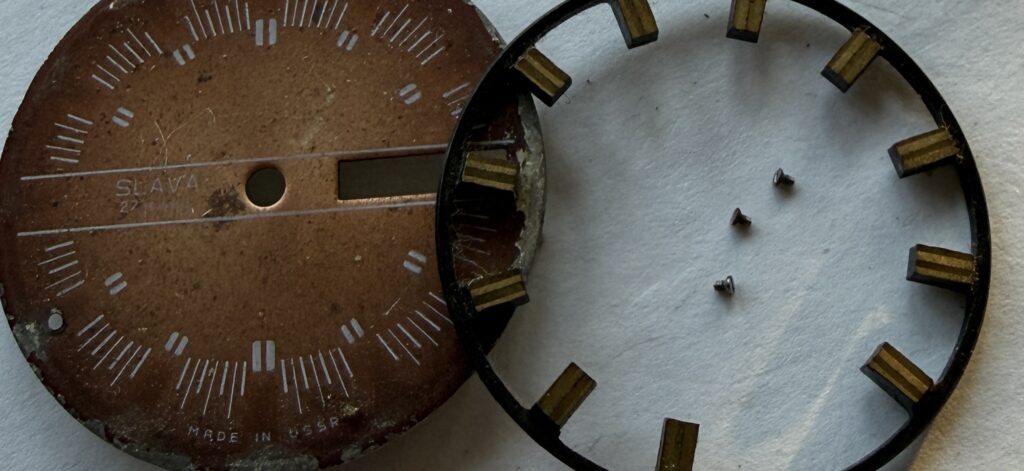
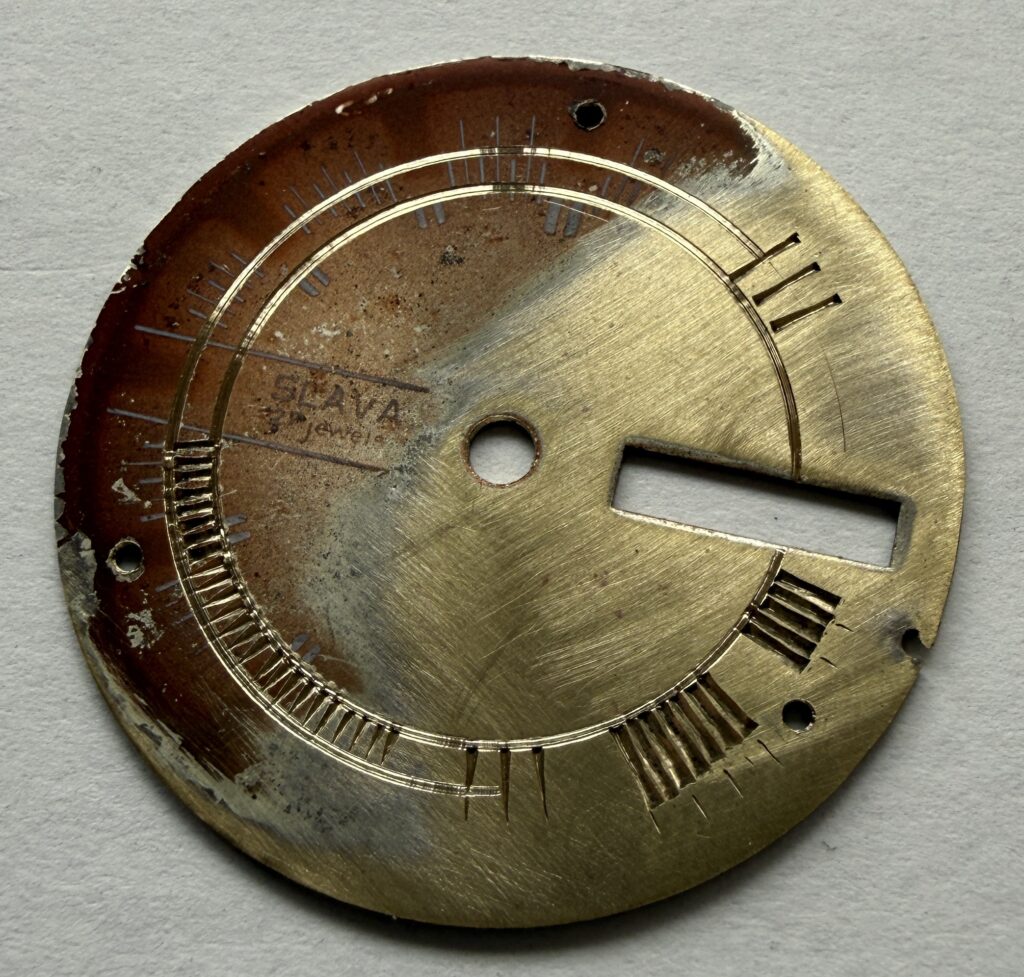
The idea was to engrave the minutes track into the dial, refinish it in some fashion, then reuse it in the mod… but boy, did I screw that up!!! Suffice it to say that it was not the best of my work…
February 6, 2026
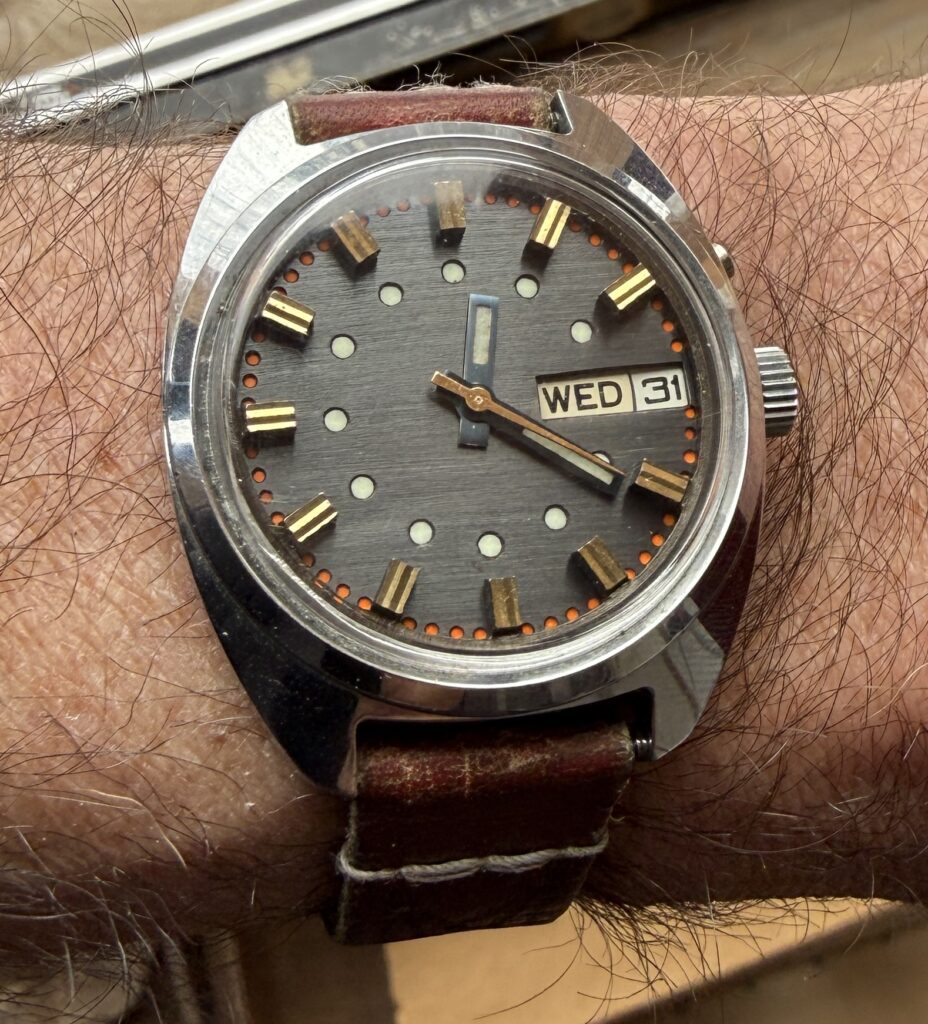
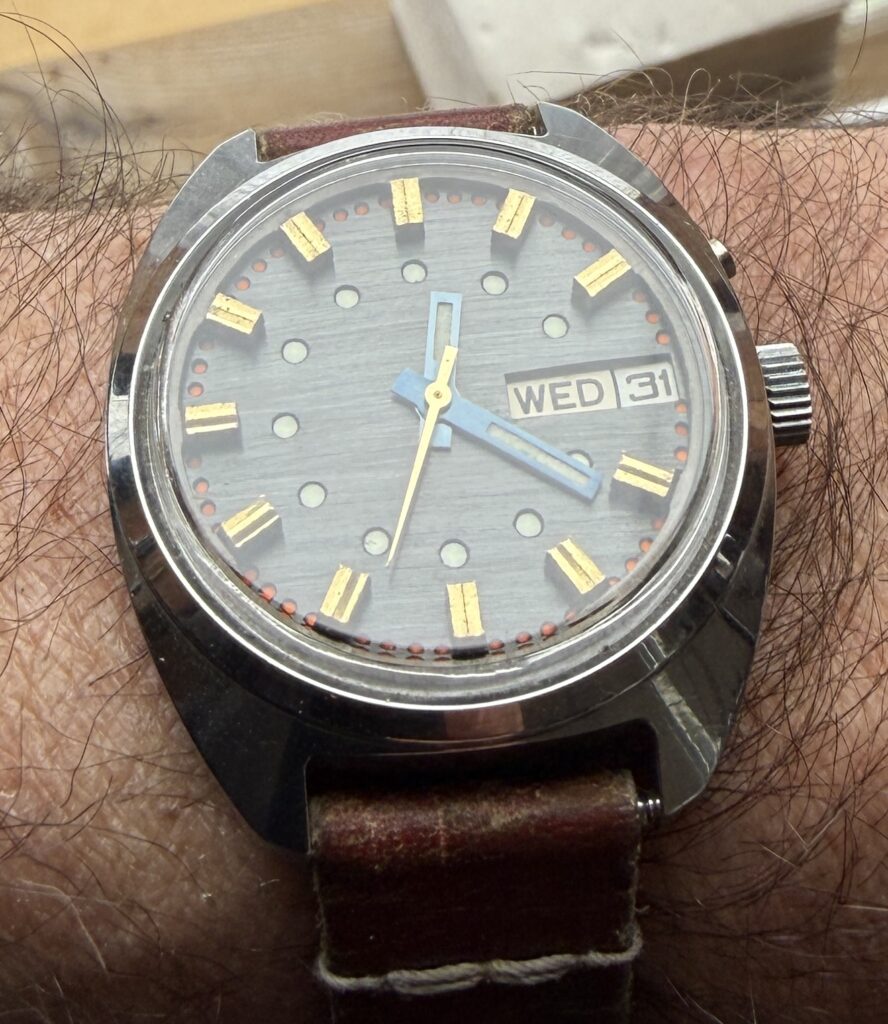
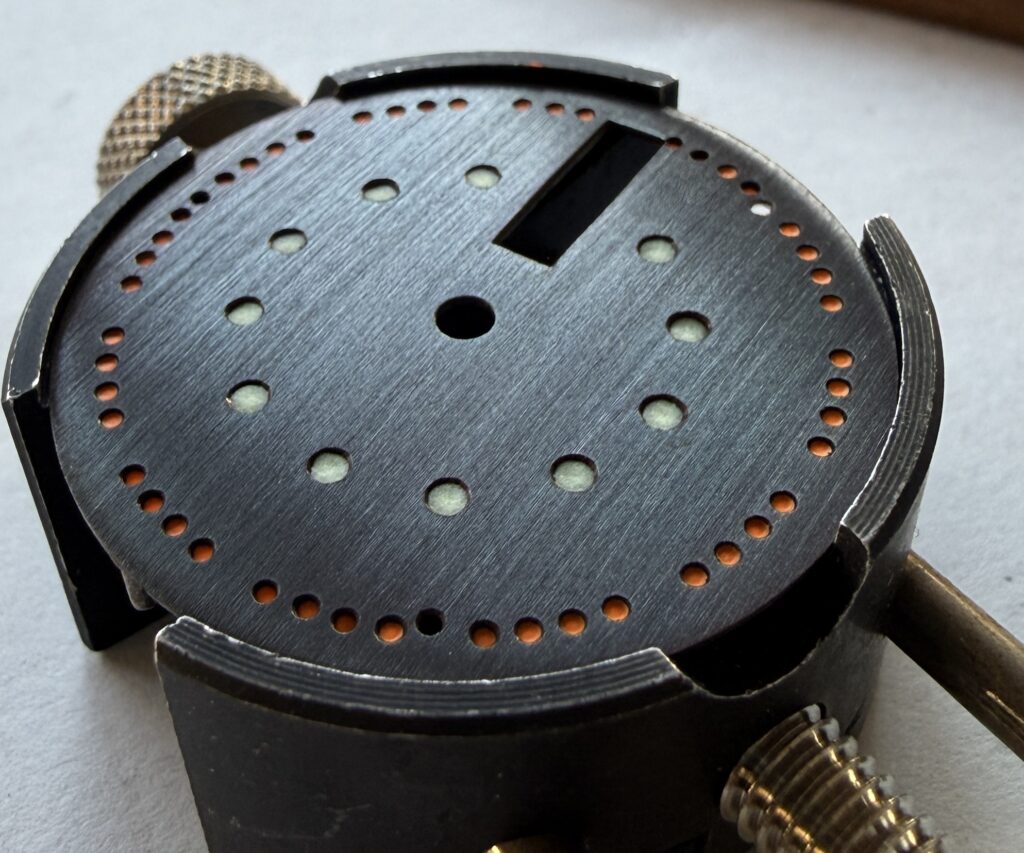
I dug through my Russian time gage pile, and pulled out a newer, complete Slava watch, one with a working movement and another dial I could potentially ruin. This new dial needed boltholes drilled through it so that the hour marker ring could get mounted. Instead of an engraved minute track, I decided to give it a through hole track, a 0.6mm hole for every minute. With lume in mind, I also drilled out through holes for every hour so that the tip of the lumed hour hand would just about touch them.
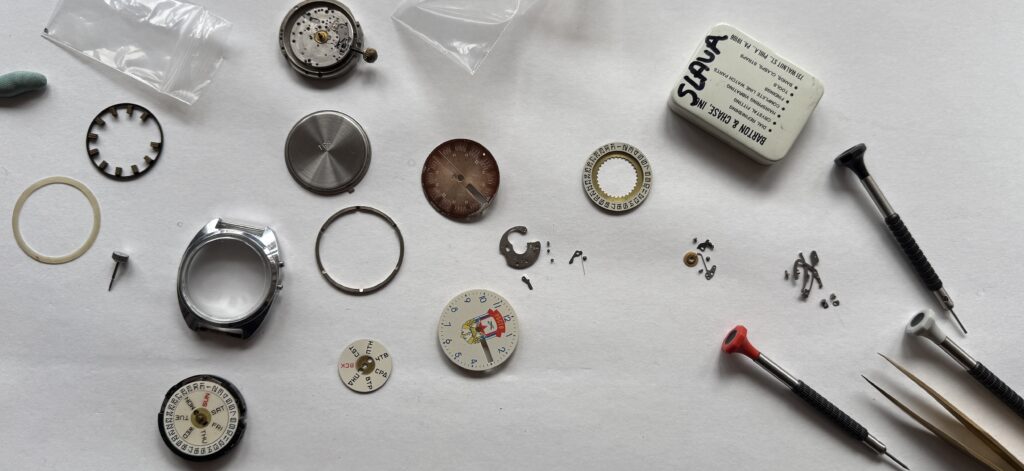
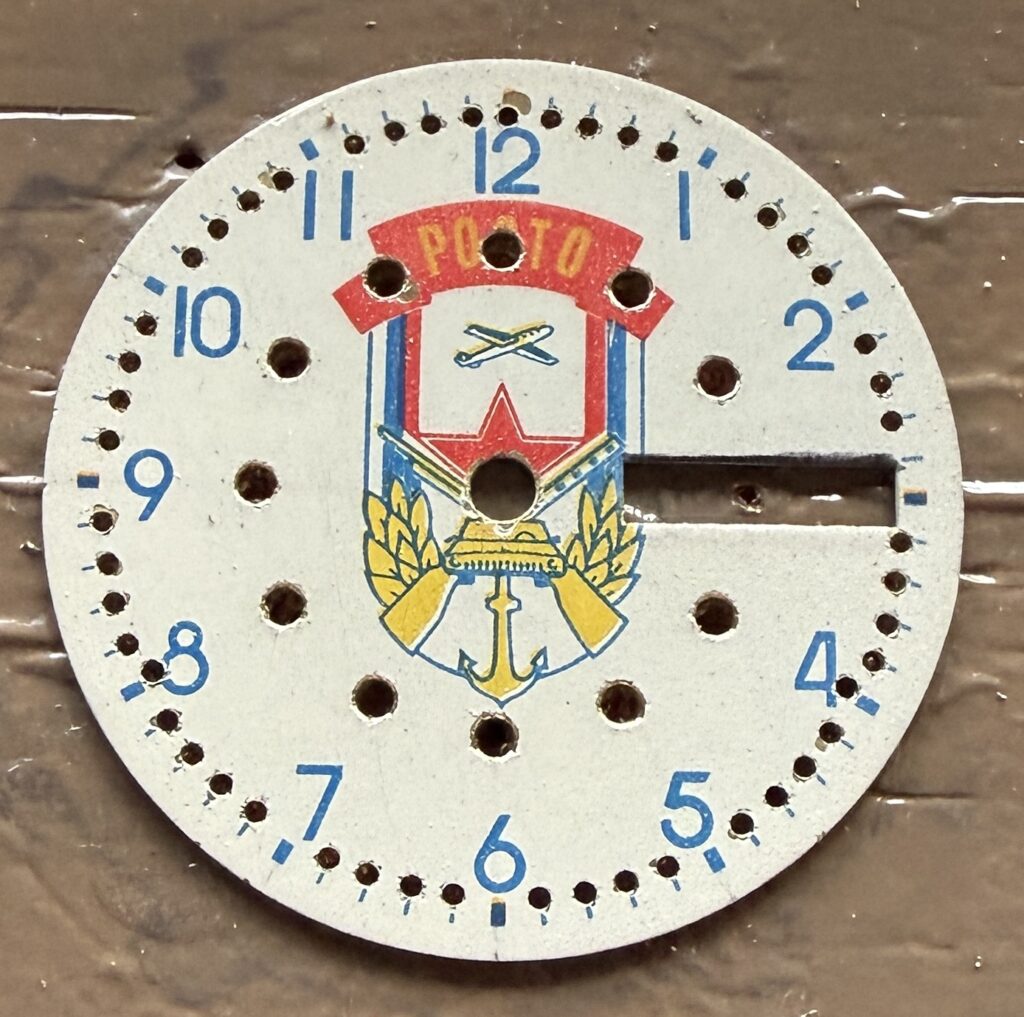
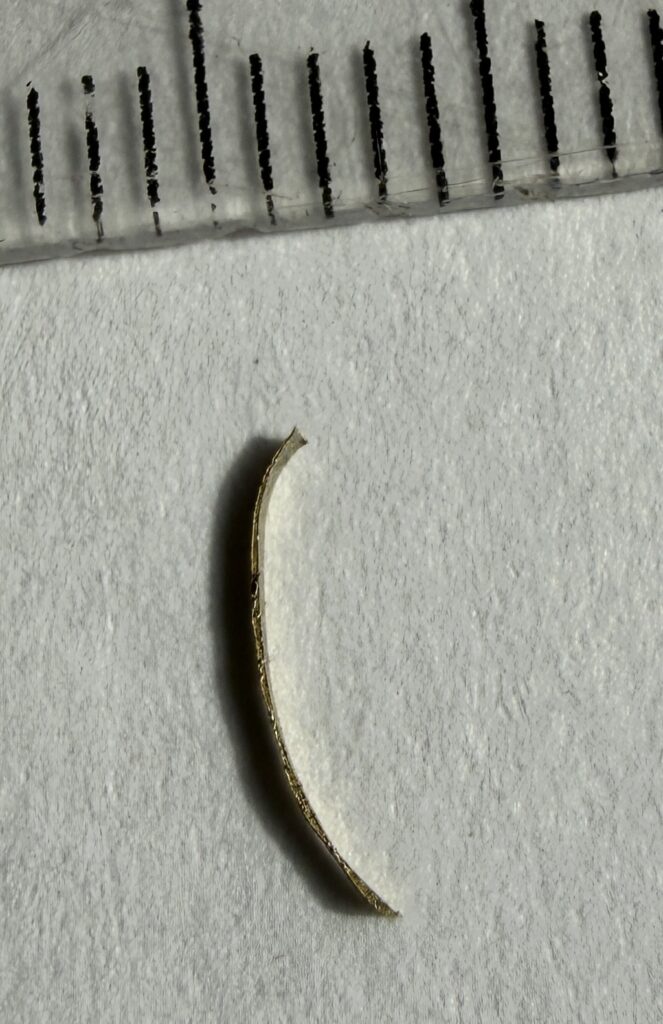
As I have already mentioned, the new movement and dial are much newer in manufacture, and as I am finding out now, a perfect case to point out some Russian inaccuracy… the date window… it was too narrow for the date, and it was blocking off the top of the text on both day and date wheels. Should I be surprised that such an error got past the QC of the Russian watch factory? I’m guessing that the whole run of dials had already been manufactured before the issue was found… but I did find it, and could easily do something about it. (Well, not so easily…) I could have just used a file to enlarge the window, but considering how much material needed to be removed, I decided to cut off a sliver with the jewelers saw, then finish the cut with a file… And I never thought I would be as proud of a brass sliver as I am of this one – less than 0.2mm consistently over a 8mm stretch!
February 9, 2026
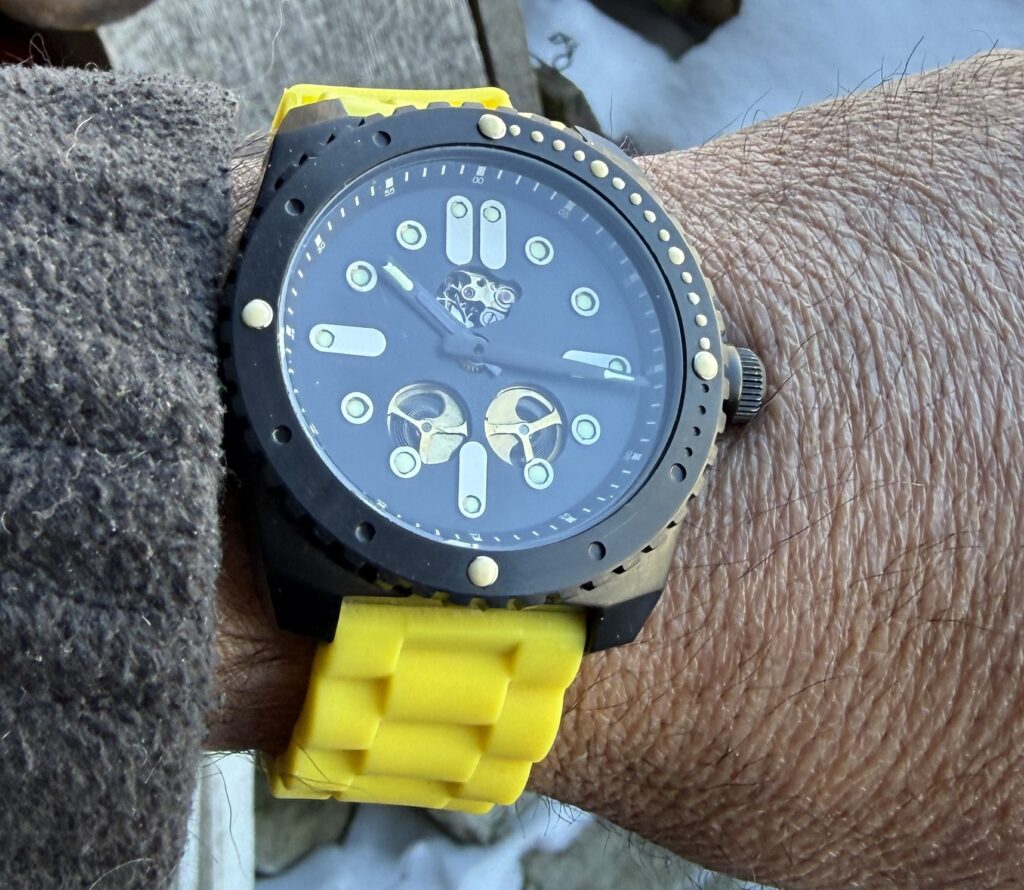
Strapped my first Slava mod to my wrist today for good luck in todays endeavors…
Being offered for sale for $160 !!!
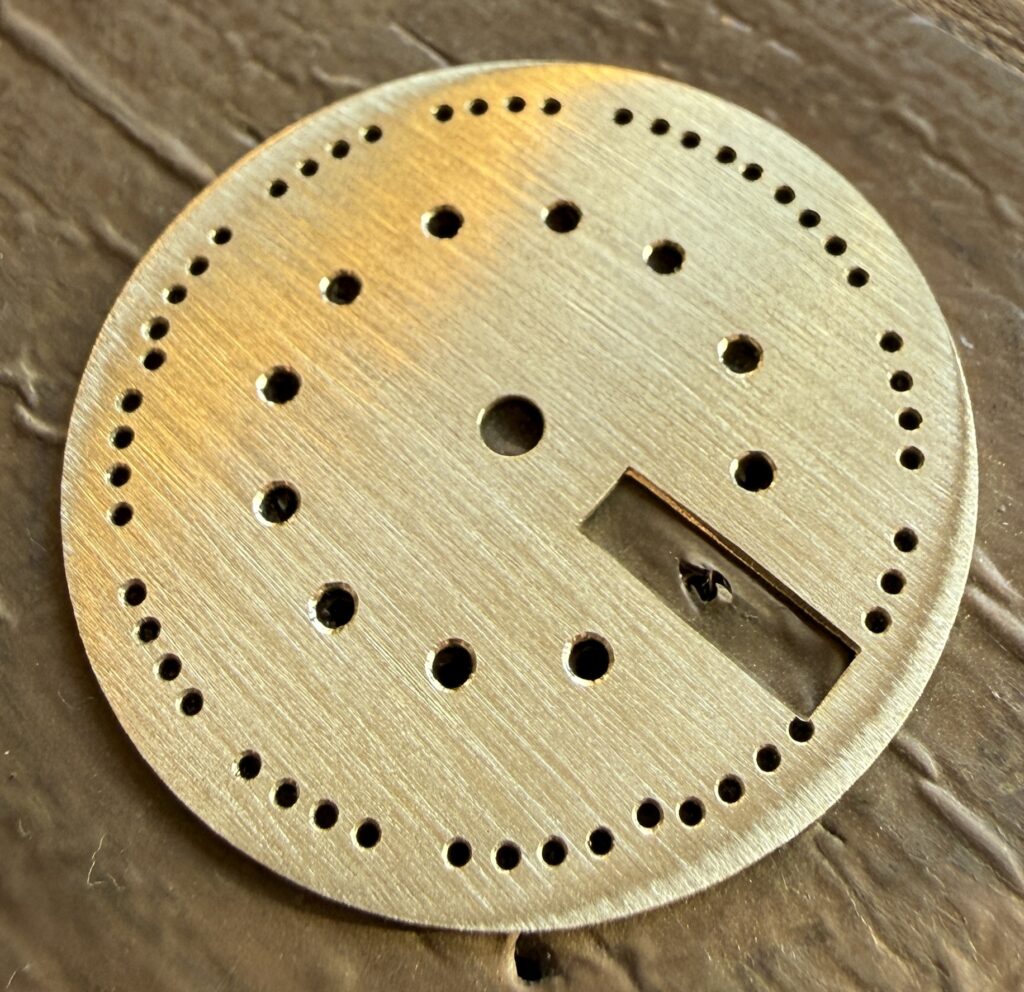
Following some deliberation between a sandblasted finish and a brushed finish on the new dial, I opted for the brushed finish (primarily because I would much rather sand the dial in the comfort of the heated barn loft shop than blow minute aluminum oxide particles onto my freezing hands at 60 PSI in the 6 degrees of Great Potential Farm’s main shop…)
I wanted enough texture to show up well after the gunbluing, so 320 grit sandpaper was decided upon as the scratch culprit.
This might be the perfect moment for some notes on drilling holes in brass dials, or at least the way I do it…
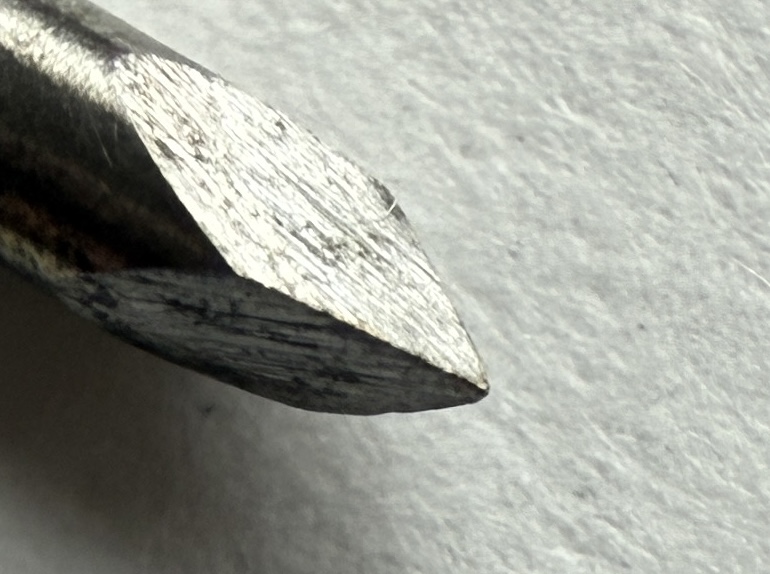
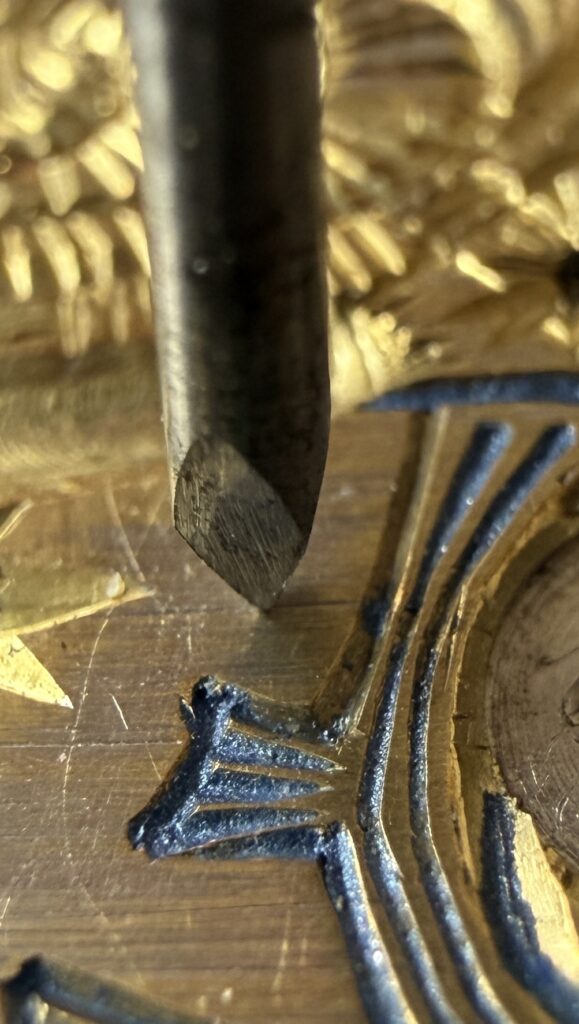
First off is the very start, after the location of the hole is marked ( a 0.4mm thick dial is just too thin for the conventional method of starting a hole with a punch and hammer. Such a method will result in serious distortion in the dial ), I spin (by hand) a 2mm high speed steel rod whose tip has been shaped into a 3 sided, 60 degree point, just enough to make an indentation my smallest drill bit will not walk out of.
Exact placement of this tool’s tip is crucial…
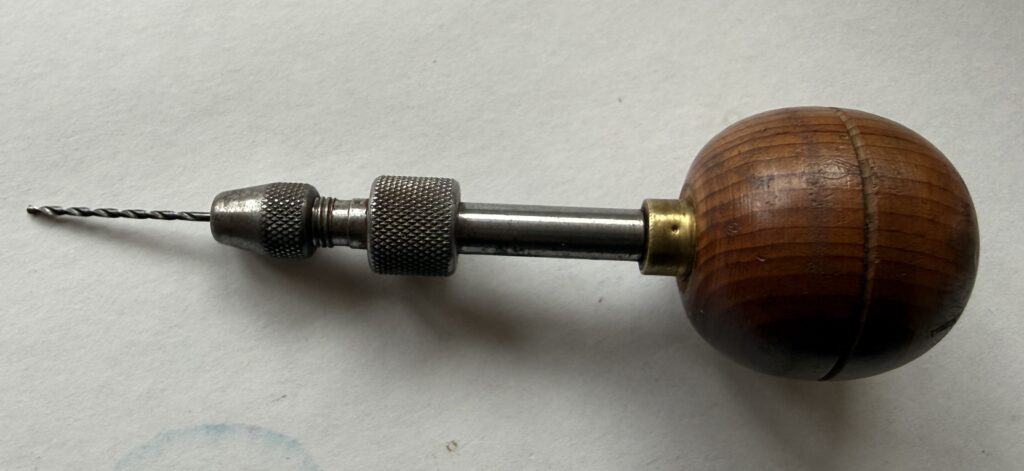
Next, I use a mini hand drill with a succession of larger and larger twist drill bits until the desired diameter hole is achieved… the largest hole I can drill by hand into a standard dial is about 1.5 mm in diameter. Anything larger than that, I use a round diamond file to enlarge the hole to very close to the final diameter, than I use a 4 sided broach to smooth the hole walls and bring it to its final diameter.
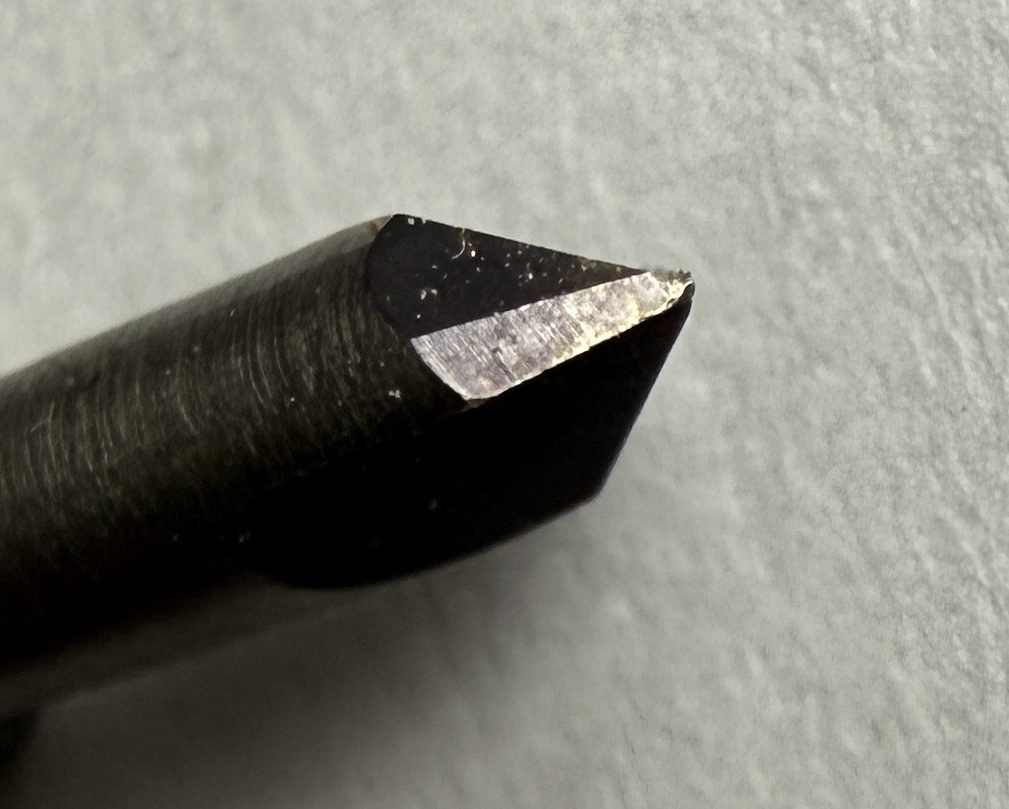
Whether the final hole is finished with a twist drill bit or a broach, both the top surface and the back of the dial will have a raised ridge or burr around the hole. I use an 80 degree, carbide countersink bit to shave off this lip ( 3 crown-style spins by hand with light pressure is usually adequate). I often use this bit to also ad just a bit of a semi-polished bevel to the edge of a hole…
…end of note on drilling.
The next step in making this dial is the chemical oxidation of the brushed brass surface. I use salicylic acid and a stiff, fine, natural hair brush for this process… constant, even motion and a final, timely H2O rinse.
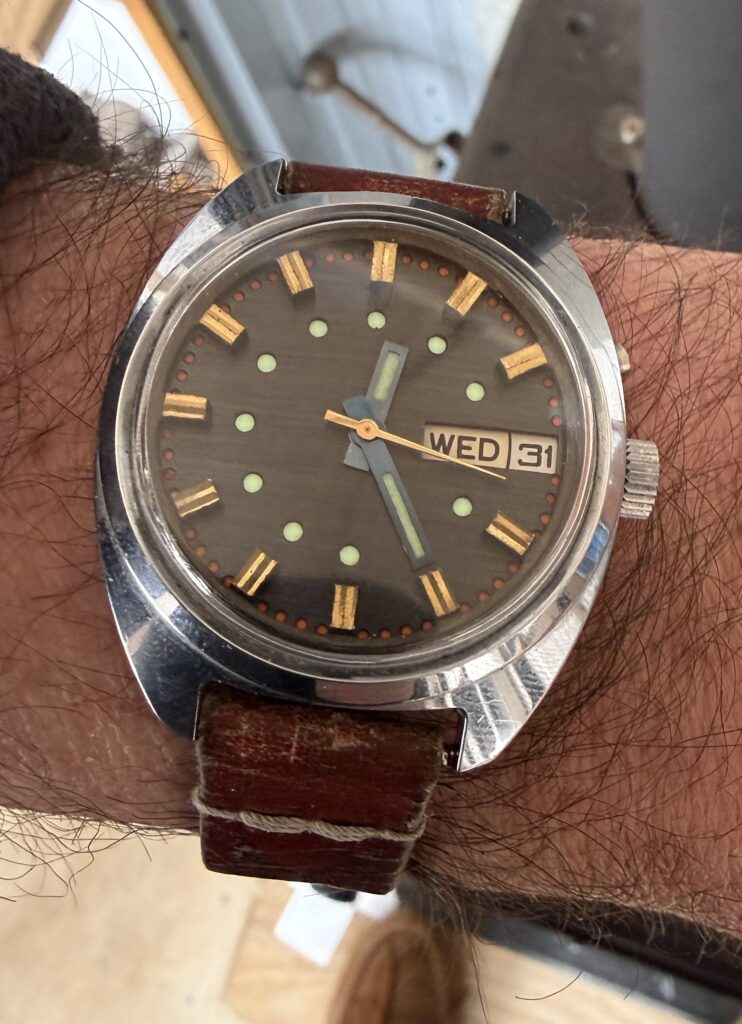
I decided to backfill the minutes track with a bright orange lacquer, and the hours track with green lume suspended in clear, oil based acrylic.
February 10, 2026
One of the really cool things about the Slava 2428 movements is the quick set function of the date. This complication is actually built mostly into the movement holder… Check it out!!!
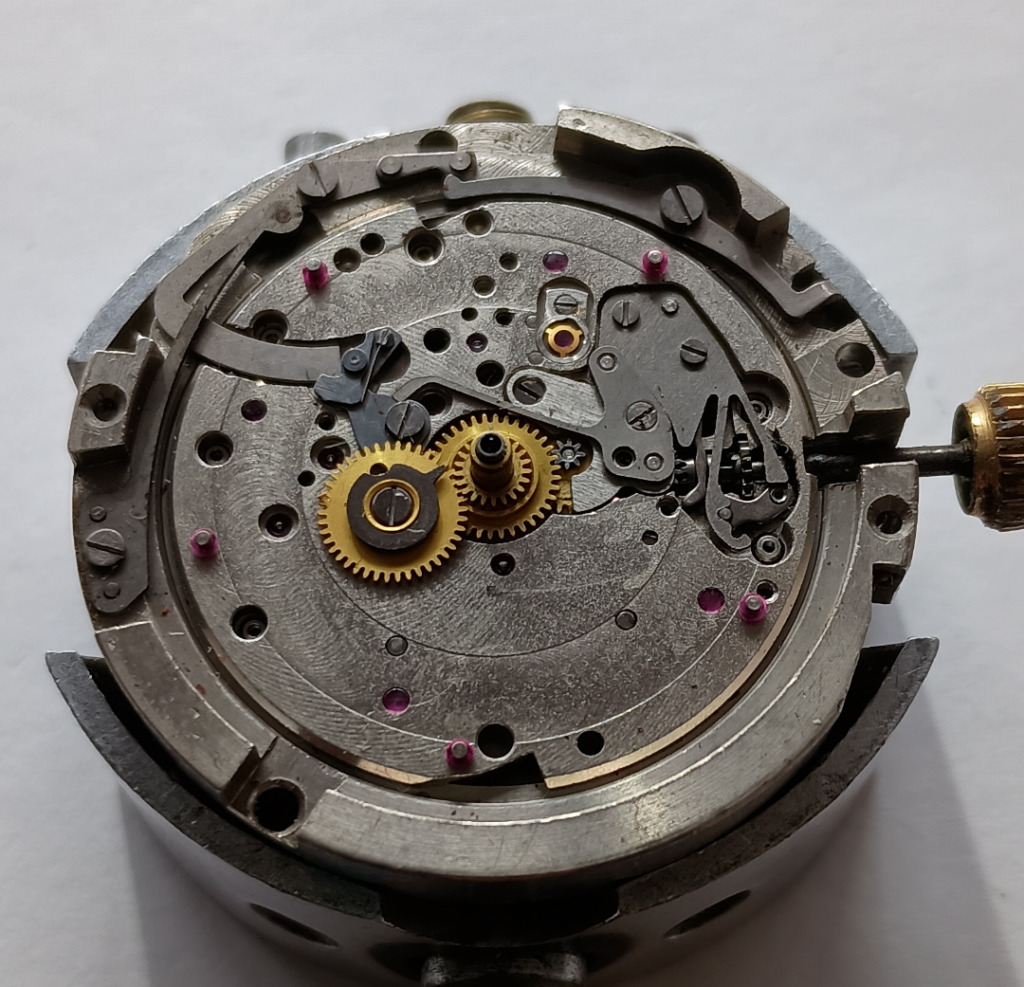
Another unusual aspect of this movement is the way that the date disk is kept centered and moving easily through the use of 5 ruby roller bearings! bringing the total jewel count to 26 rubies
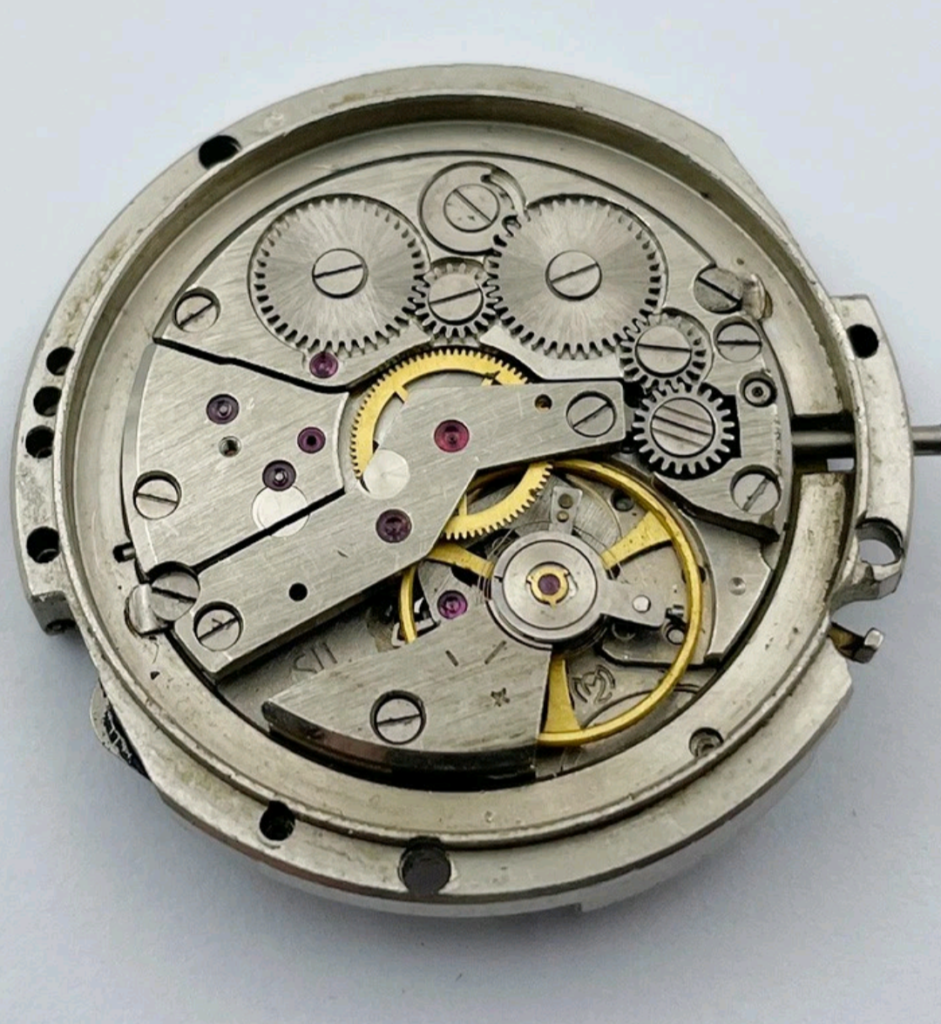
And of course, the third thing that sets this movement apart from others is its dual mainspring setup…
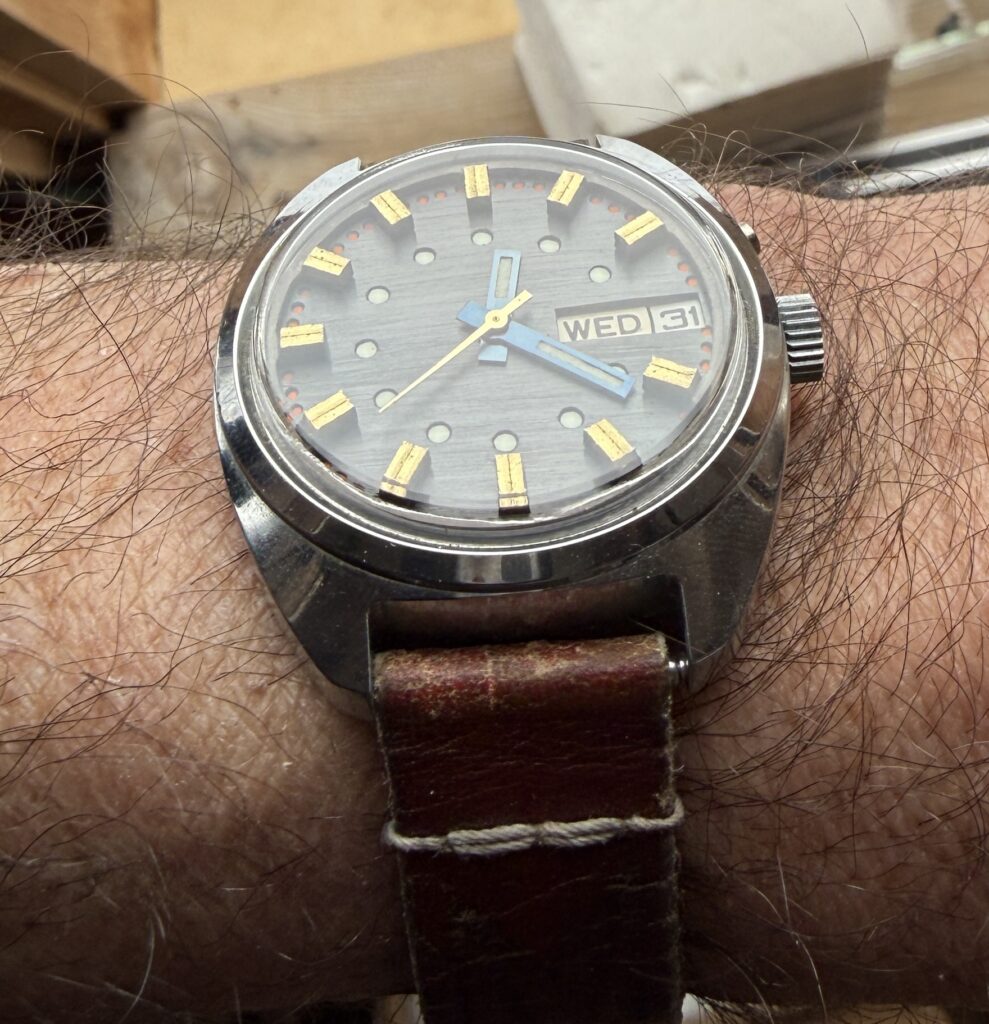
Unfortunately, I did not remember to take photos of the process involved in reworking the hands… They ended up receiving a 1000 grit linear finish, fresh lume, and since they are steel, a sky blue heat annealing…
Some photos of the finished time gage…